



Library / Watch / Autistic Pride Day Symposium 2024

Practice, Autistic Pride Day Symposium 2024
Workplace adjustments should not wait on proof of disability, a Sydney panellist said
In short
Asked at the 2024 Autistic Pride Day Symposium in Sydney how employers could afford people with higher support needs, panellists moved the question from cost to design.
Read it instead, 5 minutesThe transcript
The story
The question came from a participant who raised the difficulty of hiring people with higher support needs. People with higher support needs need more resources, they said, and many organisations have only a limited amount. How could an organisation in that position still do it?
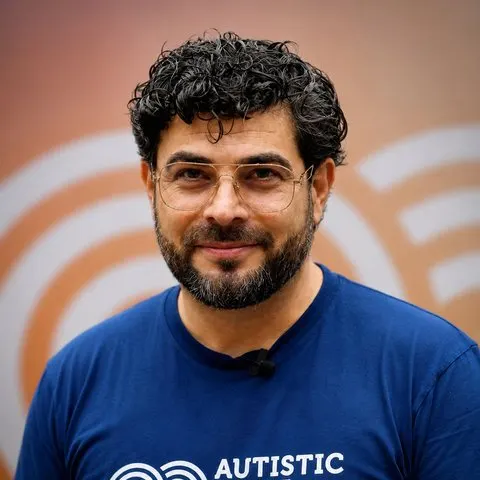
A panellist began by saying it should be done. Organisations should absolutely want to hire people with higher support needs, the panellist said, “because everybody has something to contribute”, and that meant providing accommodations. In employment, it meant drawing on the government systems available, which the panellist said were not always easy to find, a point their organisation had highlighted that day in one of its workshops, on knowing your rights. The panellist named the Job Access scheme and an assistance fund. Where an individual had disclosed their disability, they said, there was no reason an employer could not access funding to provide those accommodations, “and it’s discriminatory if they don’t.”
Sign in to keep reading, listening and watching.
Sign in with your email and everything in the Library is open to you: every story, every talk and every episode. It is free and it always will be. If you can, a donation helps keep it free for everyone.
Sources the story draws on
- Employment Assistance Fund Guidelines, Version 4.4 (opens in a new tab), Department of Social Services (JobAccess)
- Your rights as an employee under the Disability Discrimination Act 1992 (Cth) (opens in a new tab), Australian Human Rights Commission
- Disability Discrimination Act 1992, section 5 (Direct disability discrimination) (opens in a new tab), AustLII (Commonwealth Consolidated Acts)
More from Autistic Pride Day Symposium 2024
All 94- 2 minutes 17 seconds, captioned A Sydney panel on the line between autistic led and autistic co designed Anita Aherne At the 2024 Autistic Pride Day Symposium in Sydney, Anita Aherne defined an autistic led program, and panellists set out what a program needed for a listing and the red flags they watched for.
-
 7 minutes 25 seconds, captioned FutureTech asked every child how each session went, and changed the program fast Rebecca McCash, Kyriakos Gold At the 2024 Autistic Pride Day Symposium in Sydney, Rebecca McCash and a panellist from Sunny Spectrum described how their autistic led social enterprises gathered feedback and changed their programs in response.
- 5 minutes 8 seconds, captioned Funding went to large organisations with token autistic voices, Anita Aherne said Anita Aherne At the 2024 Autistic Pride Day Symposium in Sydney, autistic panellists described a funding system that rewarded size and normalising outcomes, and left autistic led programs running on donated time.
- 8 minutes 3 seconds, captioned Tammie Sinclair warned that a special interest made into work could be lost Tammie Sinclair, Rebecca McCash Autistic program leaders at the 2024 Autistic Pride Day Symposium in Sydney argued for building on special interests that diagnostic language had called obsessive. Tammie Sinclair added a caution about employment.
- 2 minutes 11 seconds, captioned Programs for late diagnosed autistic adults were scarce, a Sydney panel heard Autistic Pride Day Symposium 2024 Asked what existed for autistic adults diagnosed later in life, panellists at the 2024 Autistic Pride Day Symposium in Sydney described grief, isolation and a focus on children that left adults with little.
- 7 minutes 29 seconds, captioned What the parent of an autistic adult was told to look for, and avoid Tammie Sinclair A parent at the 2024 Autistic Pride Day Symposium in Sydney asked how to help an adult child. The panel’s answers kept returning the question to the child’s own experience.