



Library / Watch / Autistic Pride Day Symposium 2024

Practice, Autistic Pride Day Symposium 2024
When parents and schools stop trusting each other, the autistic student loses
In short
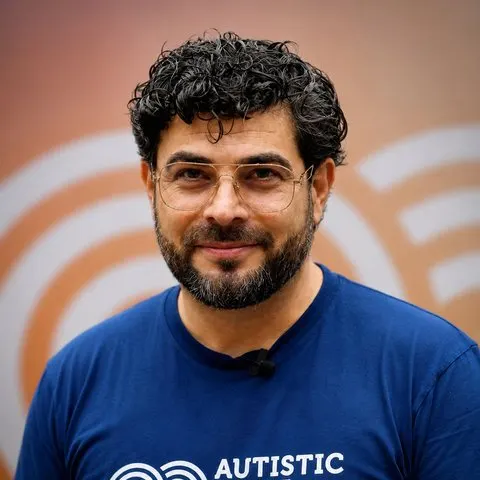
At the 2024 Autistic Pride Day Symposium in Sydney, a panellist said parents, teachers and the student must work as one team, and that schools should expect neurodivergent parents.
Read it instead, 4 minutesThe transcript
The story
When Kyriakos Gold, who hosted the session, asked the education panel at the Autistic Pride Day Symposium in Sydney in June 2024 about the role of parents in an autistic student’s education, the first answer set aside the word burden, which the panellist called the saddest thing they hear, and named the second saddest thing they see constantly. It is parents and schools at loggerheads, the panellist said, and not trusting one another.
The panellist’s argument was that three parties have to be on the same page. The parents, the teachers and the child must work together and trust that each has the young person’s interests at heart. The panellist said they see that trust break down far too often, and described what follows. In the panellist’s words, “it’s when people start to hide the truth and hide what will actually help the child because they’re then scared of stigma.” On that account, the cost of broken trust falls on the student, because what would help them is what gets hidden.
Sign in to keep reading, listening and watching.
Sign in with your email and everything in the Library is open to you: every story, every talk and every episode. It is free and it always will be. If you can, a donation helps keep it free for everyone.
Sources the story draws on
- Data do-over backs dominance of genetics in autism risk (opens in a new tab), The Transmitter (Spectrum archive)
- Disability Standards for Education 2005 (Fact sheet 2) (opens in a new tab), Australian Government Department of Education
- Report on Children and Young People with Disability in New South Wales Educational Settings Released (media release) (opens in a new tab), Portfolio Committee No. 3 (Education), NSW Legislative Council
More from Autistic Pride Day Symposium 2024
All 94-
 2 minutes 53 seconds, captioned A Sydney panel named the classroom rules that count stillness as learning Kyriakos Gold The education panel at the 2024 Autistic Pride Day Symposium in Sydney began with the rules of an ordinary classroom, and ended by arguing the system that sets them has to change.
- 2 minutes 8 seconds, captioned Why three extra weeks fail autistic students who do not understand the question Autistic Pride Day Symposium 2024 A panellist on the Sydney education panel argued in 2024 that university adjustments are offered from a fixed list, and proposed that autistic people check assessment questions before students ever see them.
- 4 minutes 13 seconds, captioned Autistic university students said they were left to educate their own lecturers Autistic Pride Day Symposium 2024 Research reported at the 2024 Sydney education panel found stigma, discrimination and outdated knowledge among university staff. The proposed next study would question the staff instead of the students.
- 2 minutes 56 seconds, captioned Dr Siobhan Lamb wanted classrooms where no student needed an accommodation Dr Siobhan Lamb At the 2024 Autistic Pride Day Symposium in Sydney, a panellist working in secondary education called neurodivergent students the canaries in the coal mine. A participant who works at Headspace warned that one design rarely fits every young person.
- 1 minute 55 seconds, captioned Schools need openly neurodivergent teachers students can look up to, Sydney panel said Sandra Thom-Jones Panellists at the 2024 Sydney education session argued for visible neurodivergent staff and autistic experts in schools, and described three local examples of schools starting to make that change.
- 2 minutes 6 seconds, captioned Letting autistic students leave an overwhelming room would cost schools nothing, panel heard Marion Rabuka, Sandra Thom-Jones At the 2024 Sydney education panel, Marion Rabuka named the sensory barriers in classrooms and Sandra Thom-Jones argued the cheapest fix was giving students the autonomy to walk out.