



Library / Watch / Think Autism Melbourne 2026

Lived experience, Think Autism Melbourne 2026
Masking whiteness before masking autism, and why racialised children go unseen
In short
Naz Jacobs told Think Autism Melbourne she masked from preschool to avoid racism, long before anyone considered she was autistic, and argued that this makes racialised autistic children easy to miss.
Read it instead, 4 minutesThe transcript
The story
Naz Jacobs began masking in preschool, and autism was not the first reason. “I was heavily masked from the time that I was in preschool”, she told the panel at Think Autism Melbourne, and then she gave the cause. “It was because I wasn’t white.”
Her earliest memories of childhood, she said, are of knowing she was different because she was not white, and of understanding that she needed to shrink herself to avoid racism. She listed what she shrank: her needs, who she was, her culture, her background and the way she presented. She said this began from the time she was in preschool.
Sign in to keep reading, listening and watching.
Sign in with your email and everything in the Library is open to you: every story, every talk and every episode. It is free and it always will be. If you can, a donation helps keep it free for everyone.
Sources the story draws on
- Students face 'confronting' levels of racism (opens in a new tab), ANU Reporter (The Australian National University)
- Racial, Ethnic, and Sociodemographic Disparities in Diagnosis of Children with Autism Spectrum Disorder (opens in a new tab), Journal of Developmental and Behavioral Pediatrics, 42(8), pp. 682 to 689 (Aylward, Gal-Szabo and Taraman); full text on PubMed Central
- The lived experiences of masking black Autistic girls in UK education: 'Before people see the autism, they see my race.' (opens in a new tab), Educational Psychology in Practice (Taylor and Francis), Nelson and Lichwa; record in the Tavistock and Portman NHS Foundation Trust repository
More from Think Autism Melbourne 2026
All 48-
 5 minutes 20 seconds, captioned Eighteen months and several NDIS applications for one refugee family Nicole Smith At Think Autism Melbourne, SSI’s Nicole Smith read the account of a mother from Iran who had to keep applying to the NDIS for her autistic son each time the family moved.
-
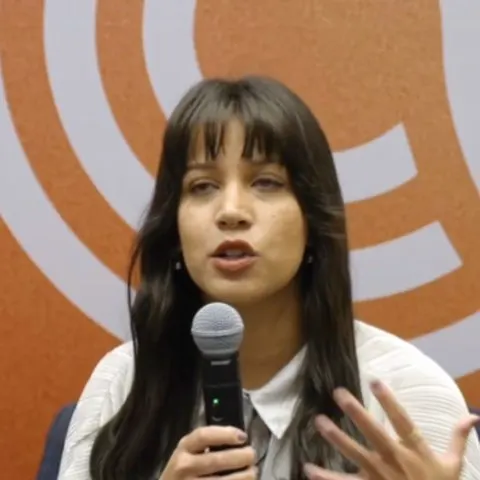 9 minutes 2 seconds, captioned Seventy years of autism research and three studies that included black women Naz Jacobs At Think Autism Melbourne, Naz Jacobs cited a review that found black women almost absent from autism research. Her fellow panellists traced what that gap does to diagnosis and support.
- 4 minutes 53 seconds, captioned Who Thriving Kids could filter out before they are ever recognised Think Autism Melbourne 2026 Panellists at Think Autism Melbourne warned that a pathway sorting children by support needs would miss First Nations and multicultural children the system had never seen, and that the child would be blamed.
- 3 minutes 57 seconds, captioned Workplaces know what excludes autistic staff and lack the will to change it Think Autism Melbourne 2026 At Think Autism Melbourne, a panellist argued that inclusion stalls for lack of will while information is abundant, and used the spread of open plan offices to show how.
-
 6 minutes 53 seconds, captioned The politics of exceptionalism and the limits of intersectionality Dr Kim Gordon, Maria Dimopoulos AM Maria Dimopoulos asked whether intersectionality was being turned into a new hierarchy. Dr Kim Gordon answered with a critique of Western either or thinking and a call to collective action.
- 5 minutes 58 seconds, captioned Self identified, undiagnosed and still needing a diagnosis to get support Think Autism Melbourne 2026 At Think Autism Melbourne, an audience member asked the field to stop talking about diagnosis. The panel agreed in principle and then explained why, for now, diagnosis still decides who gets help.