



Library / Watch / Think Autism Sydney 2025

Argument, Think Autism Sydney 2025
Counting eye contact is not success, Rebecca McCash told Think Autism Sydney
In short
Asked what failure would look like for the National Autism Strategy, Sharon Zivkovic and Rebecca McCash both pointed to measurement, from opposite ends of the system.
Read it instead, 4 minutesThe transcript
The story
Rebecca McCash had a test for whether a program works for autistic people, and on her account much of the research evidence would fail it. Research, she told the opening panel of Think Autism Sydney in May 2025, too often judges success by behaviour that matters to neurotypical observers, measuring “how many times someone makes eye contact and calling that a successful program”. That, she said, is not success for autistic people.
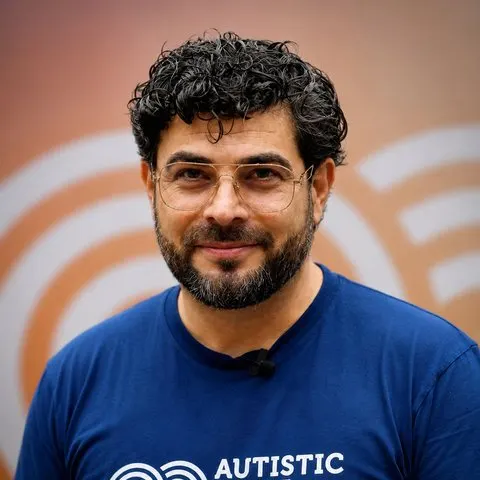
The question that drew her answer came from Kyriakos Gold, who hosted the session. He had taken part in some of the workshops that wrote the National Autism Strategy, where he and others spent their time choosing the best word for the vision and for each paragraph. Everyone talks about what success will look like, Gold told the panel, so he wanted to know what failure would look like. The strategy would control where the money went, whatever the movement did alongside it.
Sign in to keep reading, listening and watching.
Sign in with your email and everything in the Library is open to you: every story, every talk and every episode. It is free and it always will be. If you can, a donation helps keep it free for everyone.
Sources the story draws on
- National Autism Strategy 2025-2031 (opens in a new tab), Australian Government (health.gov.au)
- Listening to the autistic voice: Mental health priorities to guide research and practice in autism from a stakeholder-driven project (opens in a new tab), Autism (SAGE), vol. 24, no. 4, pp. 822-833; Benevides, Shore, Palmer and others
- National Autism Strategy 2025-31: First year Implementation update (opens in a new tab), Australian Government Department of Health, Disability and Ageing
More from Think Autism Sydney 2025
All 44- 4 minutes 9 seconds, captioned No government strategy has ever created systemic change, Sharon Zivkovic told Think Autism Sydney Dr Sharon Zivkovic On the opening panel of Think Autism Sydney in 2025, Sharon Zivkovic warned autistic leaders against taking their direction from the National Autism Strategy, and pointed them to the movements that came before.
-
 8 minutes 50 seconds, captioned A tender lost over two extra pages tested the autism strategy’s promise Kyriakos Gold At Think Autism Sydney in 2025, Kyriakos Gold asked whether the strategy was changing anything for autistic people or only describing them well. The panel answered that its value depended on what autistic people did with it.
-
 4 minutes 10 seconds, captioned Three autistic leaders set different terms for staying at the strategy’s table Christina Chun, Dr Sharon Zivkovic Asked at Think Autism Sydney in 2025 for one non negotiable they would put to government, three panellists, among them Sharon Zivkovic and Christina Chun, gave different answers about who should hold power.
- 1 minute 27 seconds, captioned A Think Autism Sydney panellist asked why Australia has no autism procurement policy Think Autism Sydney 2025 At Think Autism Sydney in 2025, a panellist proposed adding autistic led businesses to the targets in government purchasing rules. An audience member argued for a wider disability category, and another panellist pointed to the UK.
- 3 minutes 3 seconds, captioned Schools are still teaching young autistic people to mask, a Think Autism panellist said Think Autism Sydney 2025 Kyriakos Gold asked the Think Autism Sydney panel in 2025 how to guide a generation that knows it is neurodivergent and expects the system to be ready. A panellist said school was teaching them the opposite.
- 2 minutes 51 seconds, captioned Sharon Zivkovic on growing up autistic when it was called childhood schizophrenia Dr Sharon Zivkovic, Christina Chun and 1 more At Think Autism Sydney in May 2025, two autistic leaders described going through school without a diagnosis, and why an earlier label might have made things worse.