



Library / Watch / Think Autism Melbourne 2026

Practice, Think Autism Melbourne 2026
Bloom Cycle turns timber waste into trophies and wins clients by sending them one
In short
At Think Autism Melbourne in 2026, Zoe Atterbury described a business that employs a mostly neurodivergent team, sells to banks and festivals, and wins clients by sending them a trophy.
Read it instead, 3 minutesThe transcript
The story
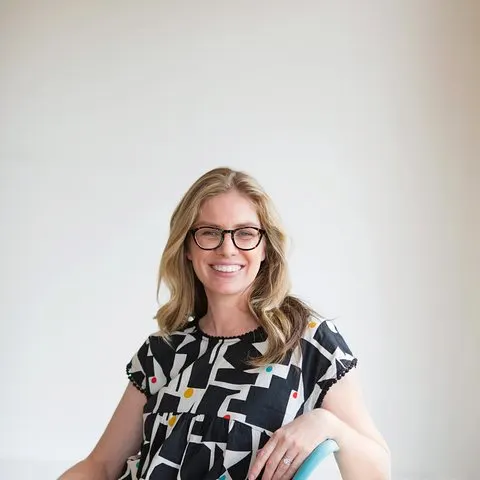
Zoe Atterbury told the autistic entrepreneurs showcase at Think Autism Melbourne on 30 May 2026 that Bloom Cycle began with two problems she had seen and that seemed unrelated. Amazing timber was going to landfill, and neurodivergent people like her were being locked out of employment. She decided to address both at once. Bloom Cycle makes sustainable trophies from Australian timber waste, and it employs a team that is mostly neurodivergent or disabled.
Both problems show up in official figures. Australia generated 2.1 million tonnes of timber waste in the 2022 to 2023 financial year and recycled 30 per cent of it, down from 41 per cent in 2016 to 2017, according to Australia’s State of the Forests Report from the Australian Bureau of Agricultural and Resource Economics and Sciences. For autistic people, one part of the group she described, the Australian Bureau of Statistics reported in October 2024 that in 2022 the unemployment rate among those of working age was 18.2 per cent, more than double the rate for people with disability and almost six times the rate for people without disability.
Sign in to keep reading, listening and watching.
Sign in with your email and everything in the Library is open to you: every story, every talk and every episode. It is free and it always will be. If you can, a donation helps keep it free for everyone.
Sources the story draws on
- Indicator 6.1e: Degree of recycling of forest products (2026) (opens in a new tab), Australian Bureau of Agricultural and Resource Economics and Sciences (ABARES), Australia's State of the Forests Report
- Autism in Australia, 2022 (opens in a new tab), Australian Bureau of Statistics
More from Think Autism Melbourne 2026
All 48-
 2 minutes 21 seconds, captioned The case that every autistic owned business is a social enterprise Roo Harris At Think Autism Melbourne in 2026, a panellist defined autistic enterprise by its social mission, and Roo Harris called entrepreneurship the ultimate accommodation. Both were questioning a model that leaves autistic people waiting on employers.
- 3 minutes 10 seconds, captioned Closed tenders and NDIS changes threaten autistic led social enterprises Rebecca McCash At Think Autism Melbourne in 2026, a panellist said autistic businesses rarely reach government shortlists, and Rebecca McCash warned that moving NDIS money into direct grants and tenders would turn enterprises like FutureTech into charities.
- 3 minutes 12 seconds, captioned Roo Harris reports a quarter of Scale Investors pitches from neurodivergent founders Roo Harris, Kyriakos Gold At Think Autism Melbourne in 2026, the venture investor said the share of pitches to the firm from founders identifying as neurodivergent had doubled in a year, evidence of what Harris called a hidden autistic economy.
- 2 minutes 16 seconds, captioned A Melbourne panellist taught entrepreneurship for 14 years and never used the tools Rebecca McCash At Think Autism Melbourne in 2026, a panellist argued that business plans and model canvases are built for top down thinkers who are comfortable predicting, and that autistic founders need a method that starts from what they control.
- 4 minutes 48 seconds, captioned Autistic founders are succeeding despite the systems, a Melbourne panel said Will Rosewarne, Rebecca McCash Asked at Think Autism Melbourne in 2026 whether autistic entrepreneurs succeed because of systems or in spite of them, Will Rosewarne asked which systems, and Rebecca McCash said the national strategy had not delivered what McCash expected.
- 4 minutes 52 seconds, captioned Autistic founders at Think Autism Melbourne asked whether AI could be their translator Roo Harris, Rebecca McCash and 1 more In 2026 a Melbourne panel weighed whether AI removes the translation autistic founders have had to do for a neurotypical business world. The answers ranged from cautious optimism to a new solo business registered at 66.