



Library / Watch / Autistic Pride Day Symposium 2023

Argument, Autistic Pride Day Symposium 2023
A panellist argued autism research had been built through a white, male, cisgender lens
In short
Asked to explain intersectionality at the closing dialogue of the 2023 Autistic Pride Day Symposium, a panellist asked who had shaped the field’s understanding of autism, and whose lives it left out.
Read it instead, 4 minutesThe transcript
The story
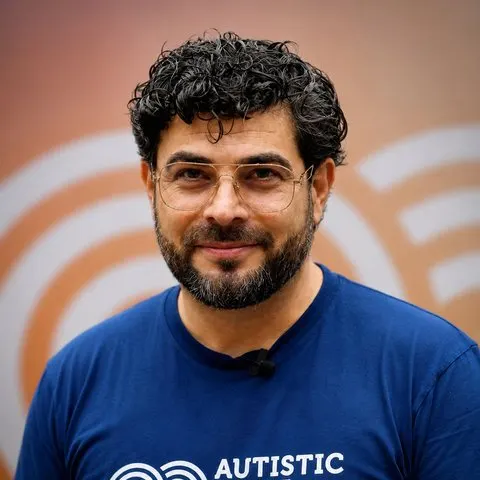
The question Kyriakos Gold, who hosted the session, put to a panellist at the closing dialogue of Australia’s first Autistic Pride Day Symposium, in Melbourne on 18 June 2023, was what intersectionality is and how it affects anyone, not only autistic people. The panellist used the answer to ask who had shaped the field’s understanding of autism, and whose lives that understanding left out.
You could do a PhD on it, the panellist said, so they would speak broadly. Intersectionality offers a critical framework of analysis. It asks questions about socially constructed identities, and more particularly it asks about power, about oppression and about power sharing. Applied to what they had heard that day, the panellist said, it would reframe the question and ask what the implications are for people whose identities intersect with race, with sexuality and with gender.
Sign in to keep reading, listening and watching.
Sign in with your email and everything in the Library is open to you: every story, every talk and every episode. It is free and it always will be. If you can, a donation helps keep it free for everyone.
Sources the story draws on
- Patterns in Reporting and Participant Inclusion Related to Race and Ethnicity in Autism Intervention Literature: Data from a Large-Scale Systematic Review of Evidence-Based Practices (opens in a new tab), Autism (Steinbrenner, McIntyre, Rentschler and colleagues), record on the UNC Frank Porter Graham Child Development Institute site
- Demarginalizing the Intersection of Race and Sex: A Black Feminist Critique of Antidiscrimination Doctrine, Feminist Theory and Antiracist Politics (opens in a new tab), University of Chicago Legal Forum (Kimberlé W. Crenshaw), record on Columbia Law School Scholarship Archive
More from Autistic Pride Day Symposium 2023
All 29-
 2 minutes 38 seconds, captioned Neurotype, culture or disorder, the first symposium’s closing dialogue began with language Kyriakos Gold Asked what autism is, speakers at the close of the 2023 Autistic Pride Day Symposium in Melbourne described a brain style and a culture, and split on whether the word disorder should stay.
- 3 minutes 50 seconds, captioned A panellist warned that anti trans politics was weaponising autism and gender identity Autistic Pride Day Symposium 2023 At the close of the 2023 Autistic Pride Day Symposium, a panellist said autistic people are more likely to be queer and trans, and explained why research into it was met with suspicion.
- 5 minutes 23 seconds, captioned Some parents froze at the word autism, and others felt relief Autistic Pride Day Symposium 2023 Asked at the close of the 2023 Autistic Pride Day Symposium whether autism still carried stigma, speakers described culturally diverse families, schoolyard taunts and the moment a diagnosis finally makes sense.
- 3 minutes 25 seconds, captioned A two hour talk can look functional and cost the speaker the day Autistic Pride Day Symposium 2023 At the close of the 2023 Autistic Pride Day Symposium, a non autistic teacher in a mostly autistic team described what audiences do not see when autistic advocates tell their stories on stage.
- 4 minutes 57 seconds, captioned Autistic panellists described allyship as work done with the real person Autistic Pride Day Symposium 2023 Asked at the 2023 Autistic Pride Day Symposium what an ally looks like, panellists answered with practice, from unmasking in public to a written user guide handed to a manager.
- 8 minutes 22 seconds, captioned A panellist warned of a lost generation of undiagnosed autistic seniors Kyriakos Gold At the 2023 Autistic Pride Day Symposium, a panellist described a lost generation of older autistic Australians and argued that aged care has to be planned for people who may never get a diagnosis.